CoopVegetale
Understanding the impact of recovered by-products on crop protection and soil health
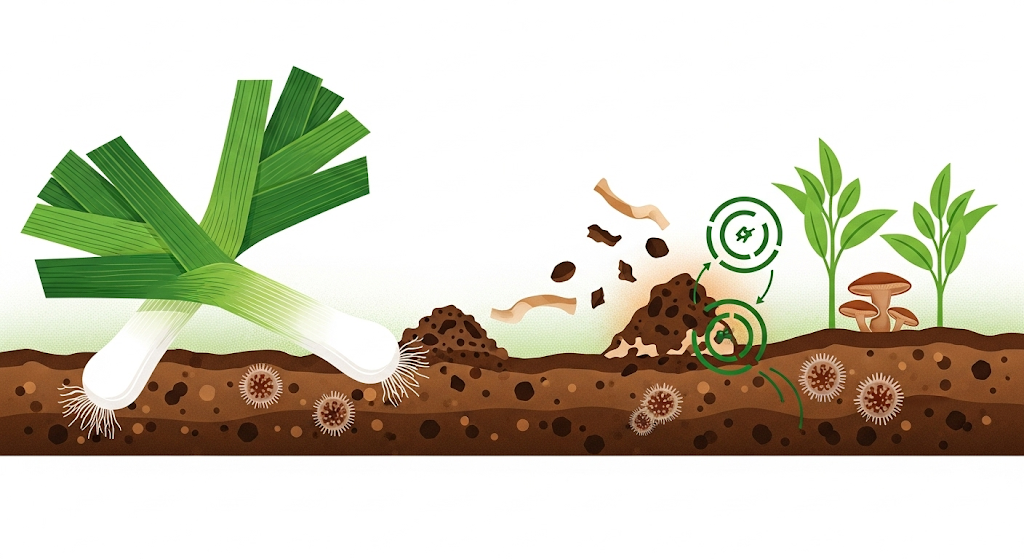
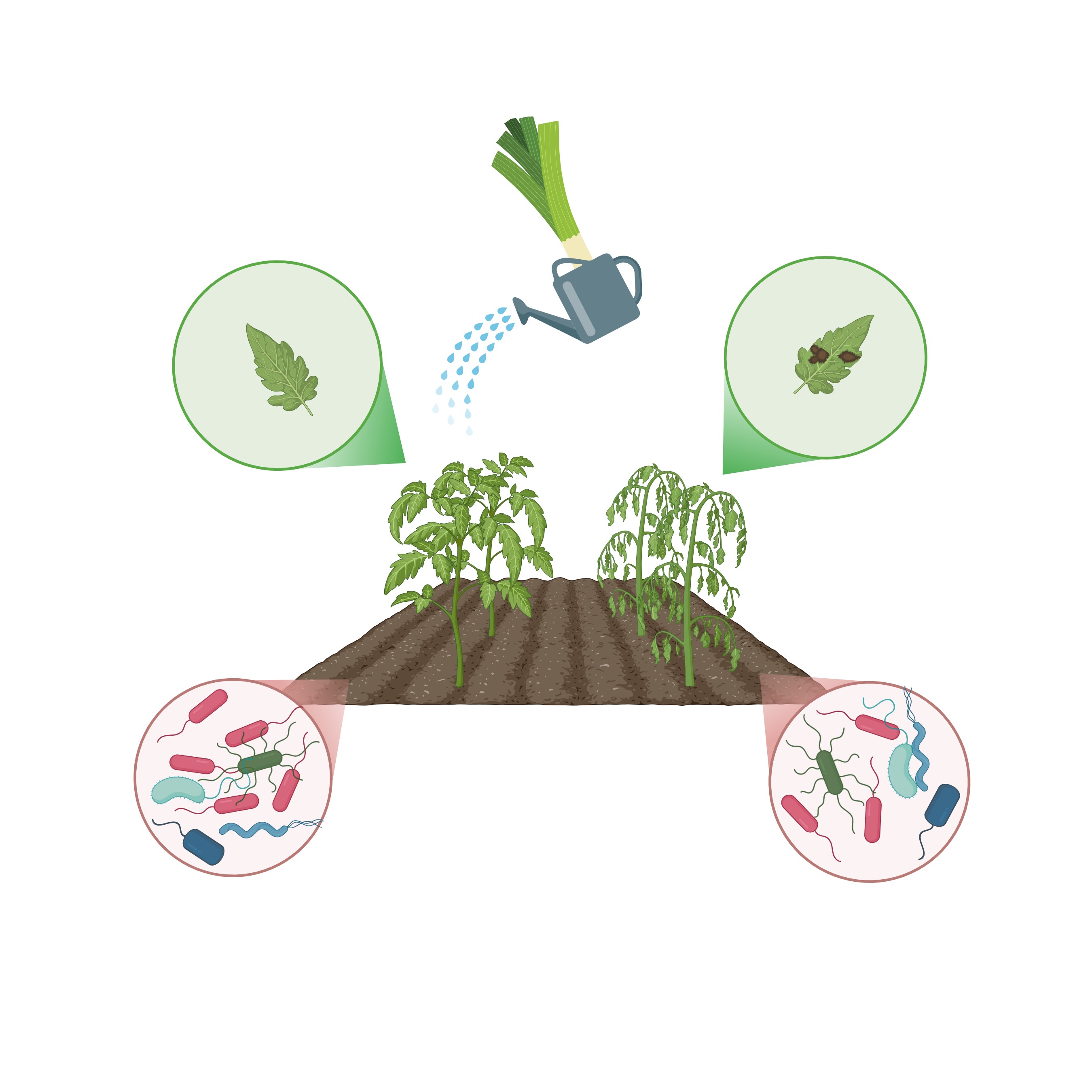
Leek is widely consumed in Europe, with France and Belgium being the leading producers. Prior to commercialization, leeks undergo processing steps that generate approximately 20% of biomass loss, primarily composed of green leaf tips and outer layers of the white stalk. As a member of the Allium family, leek has been recognized for its antimicrobial properties, mostly attributed to the presence of saponins, flavonoids, and organosulfur compounds. Recovery of these processing by-products as biocontrol agents offers a promising alternative for sustainable agriculture, aligning with circular economy principles. To this end, we have developed a process for stabilising the fungicidal activity contained in these by-products that is now protected by a patent. The current objectives rely on the identification of the active substances present in the aqueous extract in collaboration with the "Museum National d'Histoire Naturelle", the elucidation ot the molecular mechanisms underlying the fungicidal effect of these extracts, particularly against Alternaria alternata, the characterization of antifungal activity variations related to environmental factors such as territory, seasonal conditions and cultivar diversity in collaboration with a trial station, the potentialization of fungal activity by combining leek aqueous extract with phytopharmaceutical products and the evaluation of the response of soil microbiome to leek extract.