Cerebral Ageing: First-Ever Culture of Brain Organoids in Space
The Cerebral Ageing project marks a major scientific milestone: for the first time, brain organoids were successfully cultured aboard the International Space Station (ISS). Launched in 2019, this pioneering experiment aims to better understand the mechanisms of brain ageing in a space environment.
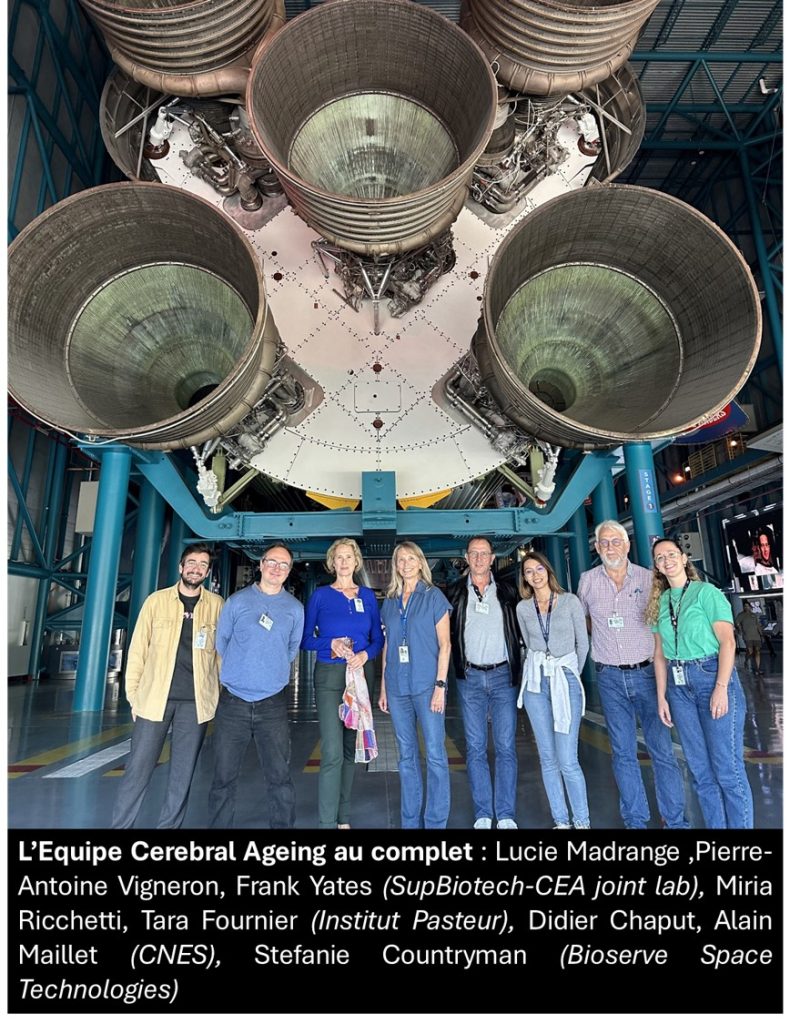
In November 2023, a total of 84 brain organoids were sent to space as part of a collaboration between CNES (CADMOS), the Institut Pasteur, SupBiotech, and Bioserve Space Technologies, with support from NASA and ESA. These three-dimensional structures, derived from stem cells, mimic key aspects of the developing human brain. Cultivated in microgravity and exposed to cosmic radiation, they provide a unique model for studying cellular ageing.
Under the scientific leadership of Miria Ricchetti (Institut Pasteur) and Frank Yates (SupBiotech), the mission demonstrated, for the first time worldwide, that complex human cell cultures can grow and remain viable in orbit. After returning to Earth in excellent condition in December 2023, the organoids are now undergoing in-depth analysis, including assessments of cell health, epigenetic changes, and molecular profile evolution.
The data generated will help clarify how spaceflight conditions impact brain cells, with potential implications for understanding age-related neurodegenerative diseases. Ultimately, this research may inform new health protocols for astronauts on long-duration missions.
This project is supported by CNES, ESA, the Institut Pasteur, SupBiotech, and the France 2030 national investment plan through the LabEx Revive program.