


Context
Intelligent agriculture has become essential as global food systems face increasing pressure from climate instability, resource scarcity, and the need for sustainable production. By combining data‑driven monitoring, automation, and AI‑supported decision‑making, smart farming enables more precise use of water, energy, and nutrients while reducing environmental impact. These technologies help farmers anticipate stress, optimize yields, and adapt to unpredictable conditions—making agriculture more resilient, efficient, and aligned with long‑term ecological and economic challenges.
Recent advances in plant electrophysiology and bio‑digital interfaces now allow us to “communicate” with plants by interpreting their physiological signals in real time. Through systems such as bioimpedance‑based sensing and IoP architectures, plants can actively express their state—light stress, hydration levels, or environmental reactions—directly to machines. This emerging capability opens the door to highly responsive agricultural systems, where plants themselves guide irrigation, lighting, and resource management. Beyond food production, it also transforms our relationship with the plant world by creating new forms of interaction, perception, and understanding between humans, digital systems, and living organisms.
Technical Specifications
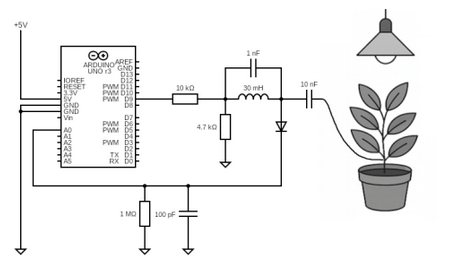
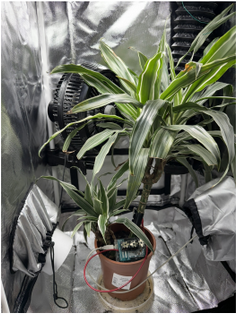
Plants have natural electrical activity that changes depending on what they experience—light, water, temperature, or even a simple touch. By sending a small electrical signal through the plant at different frequencies and measuring how this signal changes, we obtain a kind of “signature” of its internal state, known as bio‑impedance. A microcontroller like an Arduino can record these variations and produce curves that shift depending on light levels, hydration, or physical interaction. When hundreds of these measurements are analyzed with machine‑learning algorithms, the system learns to automatically recognize different states of the plant, such as whether it is illuminated, stressed, or being touched. The model detects subtle patterns that humans cannot see and predicts the plant’s condition in real time. Once this feedback loop is established, the plant itself becomes a true sensor: it can trigger watering when it lacks moisture, adjust lighting when stressed, or send an alert when it is touched. Integrated into an IoT network, the plant no longer just sits in its environment—it interacts with it, responds to it, and even controls certain actions. Through this approach, plants become fully active components of the Internet of Things, able to communicate their state and guide automated systems around them.
Provided materials
- An Arduino
- Every electronic parts
- Original research paper
Developed Skills :
- Electronic Manufacturing
- Signal Processing
- Machine Learning
- Python & Arduino Coding
- Wireless Sensor Network
- Plant Electro-Physiology
Pedagogical Goals :
- Project Management
- Research Understanding
- Innovation Design
Application Examples
We present two illustrative projects that demonstrate how connected plants can act as intelligent interfaces in artistic and environmental contexts. While these examples showcase the creative and technical potential of the Internet of Plants—from immersive musical installations to plant‑driven micro‑greenhouses—the approach is intentionally open to a wide range of applications and new ideas.
Connected Mini-greenhouse
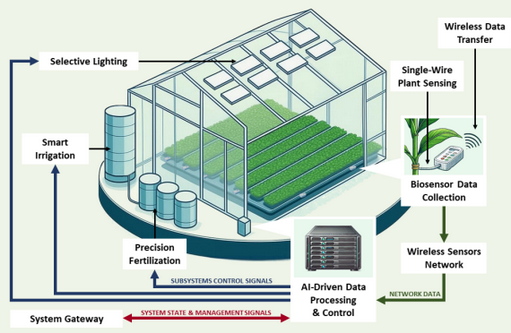
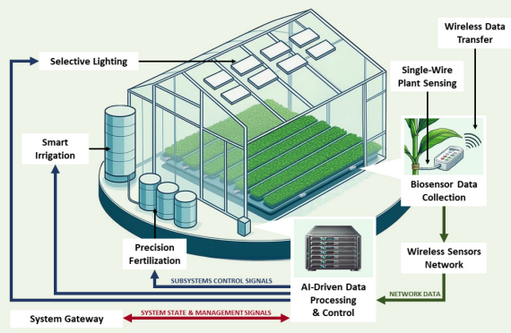
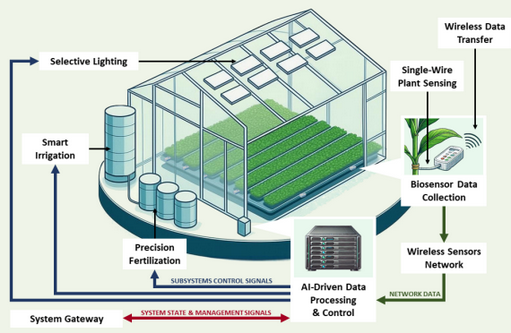
A connected mini‑greenhouse built on this technology can operate as a self‑regulating ecosystem where the plants actively manage their own environment. By continuously measuring their bio‑impedance, the system interprets the plants’ real‑time needs—light, water, temperature, or stress—through machine‑learning models trained to recognize their electrical signatures. When the plants signal thirst, the greenhouse triggers micro‑irrigation; when they detect excessive light, it adjusts shading or modifies artificial lighting; when they experience stress, it adapts ventilation or humidity. In this setup, plants become both sensors and decision‑makers, directly piloting the greenhouse infrastructure instead of relying on rigid pre‑programmed rules. This plant‑driven automation creates a dynamic micro‑habitat that responds naturally and continuously to biological signals, enabling healthier growth, optimized resources, and a deeper integration of living organisms into the Internet of Things.
Immersive Art Environment
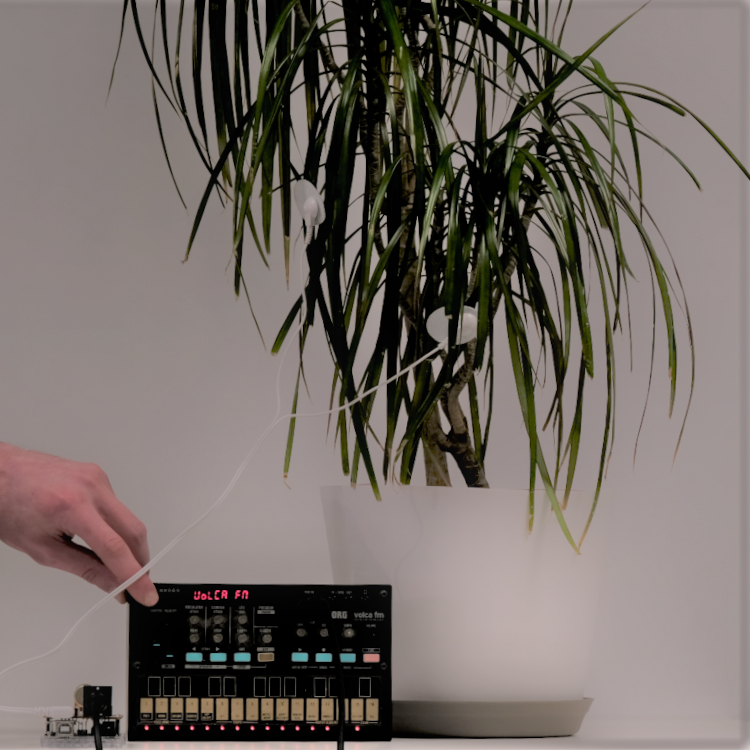
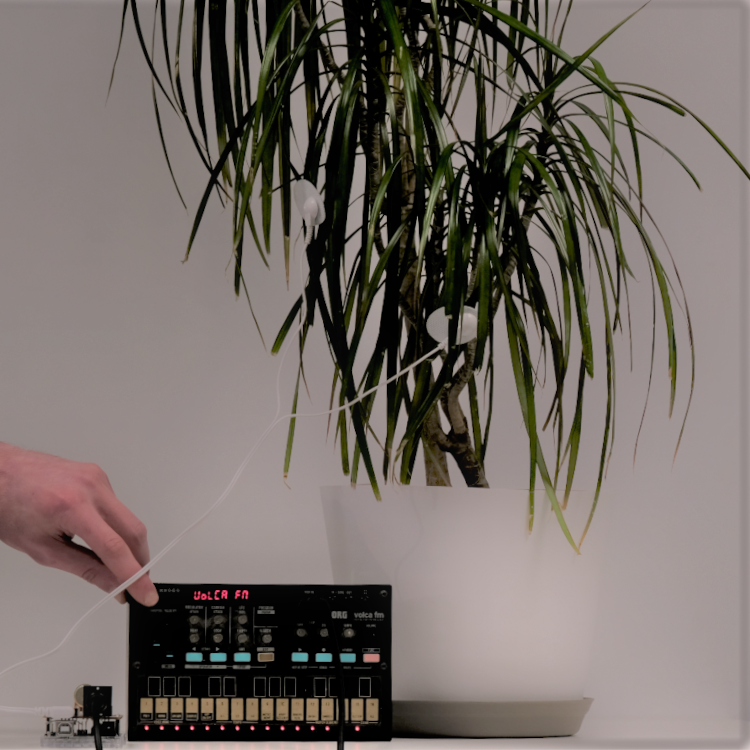
Connected plants can also be turned into expressive musical instruments, forming the basis of a living sound organ where each plant becomes a performer. By capturing their bio‑electrical signals and translating them into sound through machine learning, plants can modulate tones, rhythms, or textures depending on light, touch, or environmental changes. This Internet of Plants creates a new kind of musical interface in which human gestures, plant reactions, and digital interpretation merge into a single artistic ecosystem. In an immersive installation, people can literally hear their interaction with a plant, transforming a simple touch or change of light into a musical event and turning the space into a responsive, interactive forest‑instrument.