




Context
Designing objects with bio‑sourced or recycled materials responds to major socio‑ecological challenges by reducing dependence on petroleum‑based plastics, lowering carbon emissions, and encouraging circular‑economy practices. These materials promote more responsible production cycles by transforming organic waste, renewable resources, or biodegradable components into valuable artefacts. Such approaches also foster environmental awareness, empower local fabrication ecosystems, and open new opportunities for sustainable innovation in art, design, engineering, and industry. By integrating ecological responsibility directly into the creative process, students and makers contribute to a more resilient and regenerative material culture.
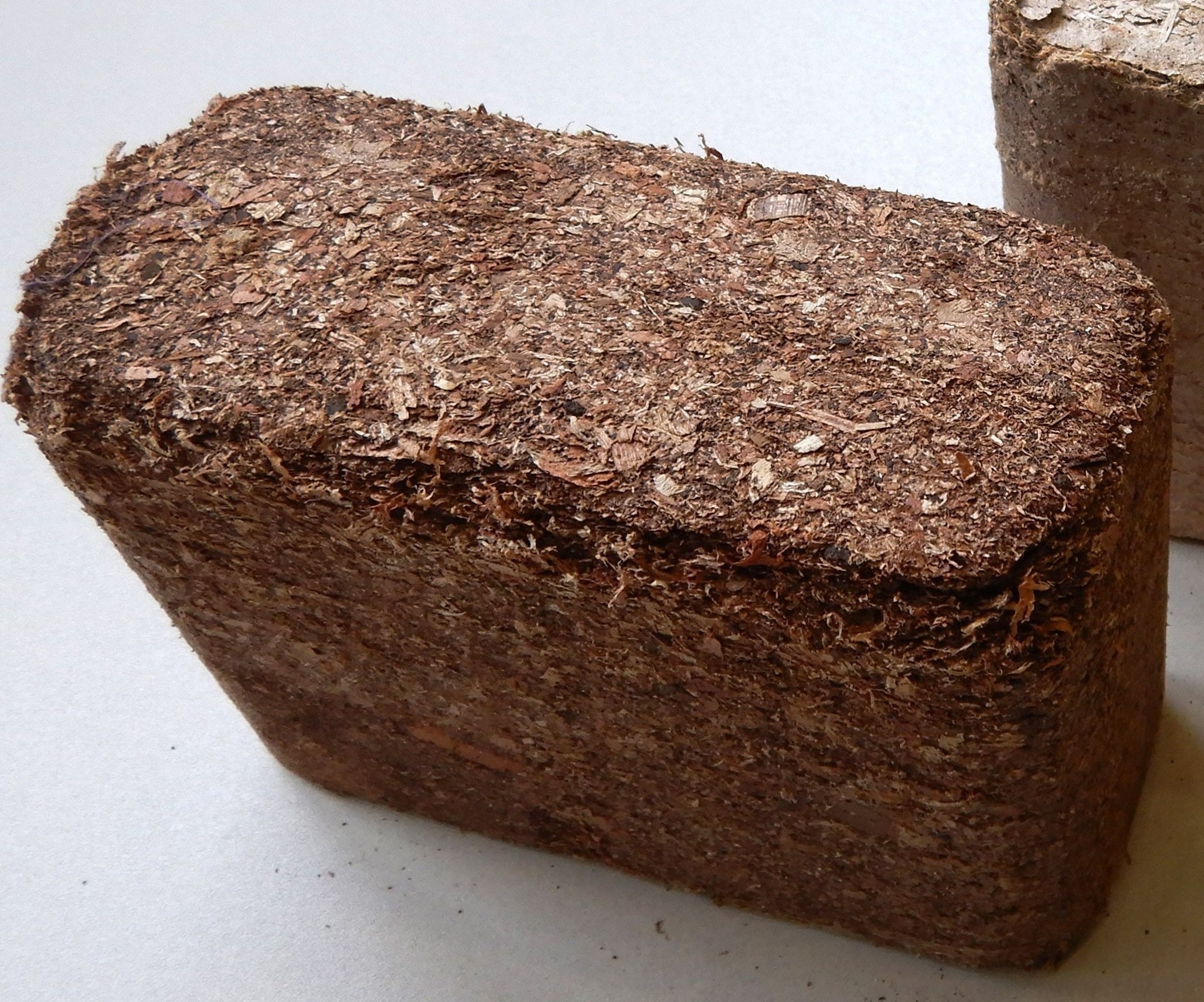
This research explores the potential of cultivated organic materials and organic waste valorized as new material interfaces for textiles and buildings. The project can develop in distinctive sectors such as biobased coatings and composites from resources such as mycelium, algae, bacterial cellulose or coffee grounds, by integrating circular economy and local production logics. We know that through existing or experimental applications, these materials offer proven functional properties—lightness, breathability, insulation, biodegradability — while opening aesthetic and sensitive avenues. That is why the project will explore a topic around coffee grounds, which questions the transformation of an urban waste abundant in expressive and efficient materials, offering an approach that is both technical, ecological and poetic of the material, while inviting us to rethink our relationship with everyday resources.
Coffee grounds are an abundant urban organic waste, generated in large quantities by cafes, restaurants, businesses and households. Currently, it is mainly incinerated, composted or landfilled, while it presents a potential material still under-exploited. At the same time, the building, design and interior fittings sectors are looking for materials:
- Low environmental impact.
- Integrating recycled materials.
- Compatible with existing industrial processes.
Example of Receipes
Designing objects with bio‑sourced or recycled materials begins by selecting natural or waste‑derived components—such as coffee grounds, plant fibers, starches, or biodegradable polymers—and transforming them into stable, moldable substances. Coffee‑ground leather, for example, can be created by mixing finely processed coffee waste with agar‑agar, glycerin, and natural binders to form a flexible biopolymer sheet that dries into a durable, leather‑like material. Similarly, bioplastics can be produced by heating starch or gelatin with water, vinegar, and plasticizers until the mixture thickens, then casting it into molds or onto flat surfaces to create solid parts once cooled. These materials can be shaped, cut, laser‑processed, or sewn like conventional textiles, while offering a drastically lower environmental footprint. Through iterative testing—adjusting ratios, drying times, and additives—designers can achieve a wide range of textures, rigidities, and colors suitable for prototyping sustainable objects and functional components.
General Overview
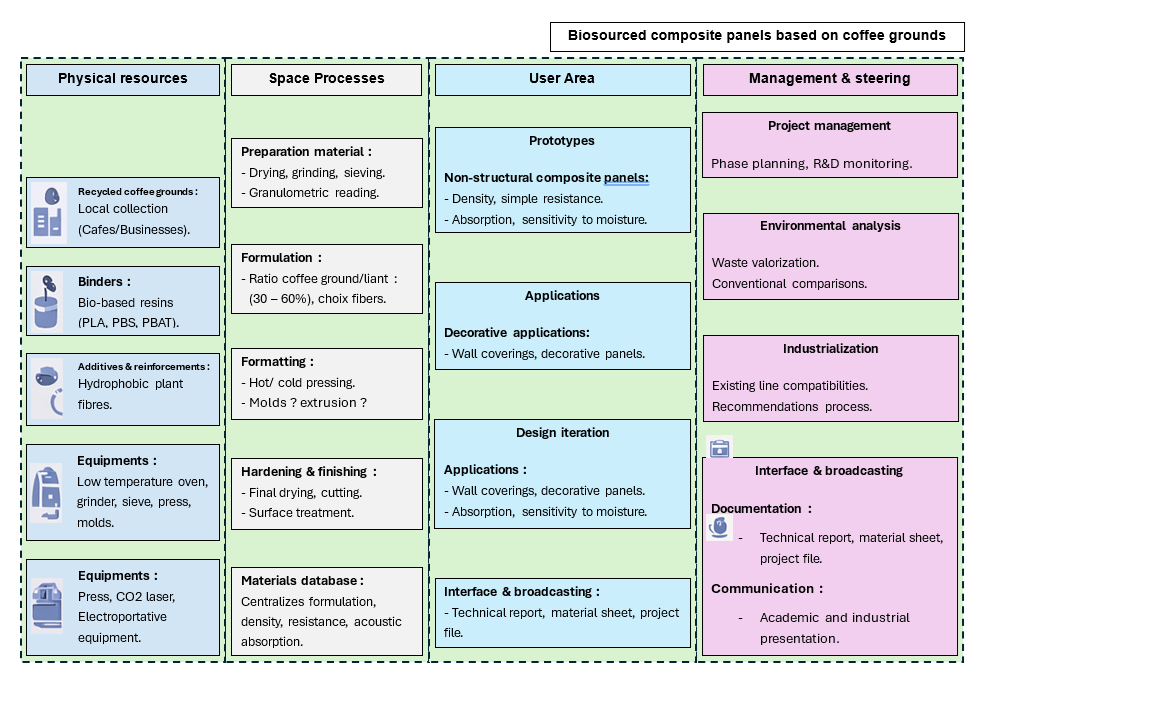
Equipment available :
- I2T Workshop machinery
- Additive workshop FAB LAB
- Research partnership
Developed skills :
- Skills in materials science and process engineering
- Capable of formulating and characterizing lightweight bio-based composites
- Master the basics of binder chemistry
- Mastering shaping processes (pressing, molding, drying)
- Master mechanical, thermal and hygrometric characterization methods.
Pedagogical Goals :
- Project Management
- Awareness of ecodesign issues
- Awareness of the circular economy
- Acquisition of skills on building standardization
- Ability to work in a multidisciplinary framework
- Learning in applied research, design and experimentation