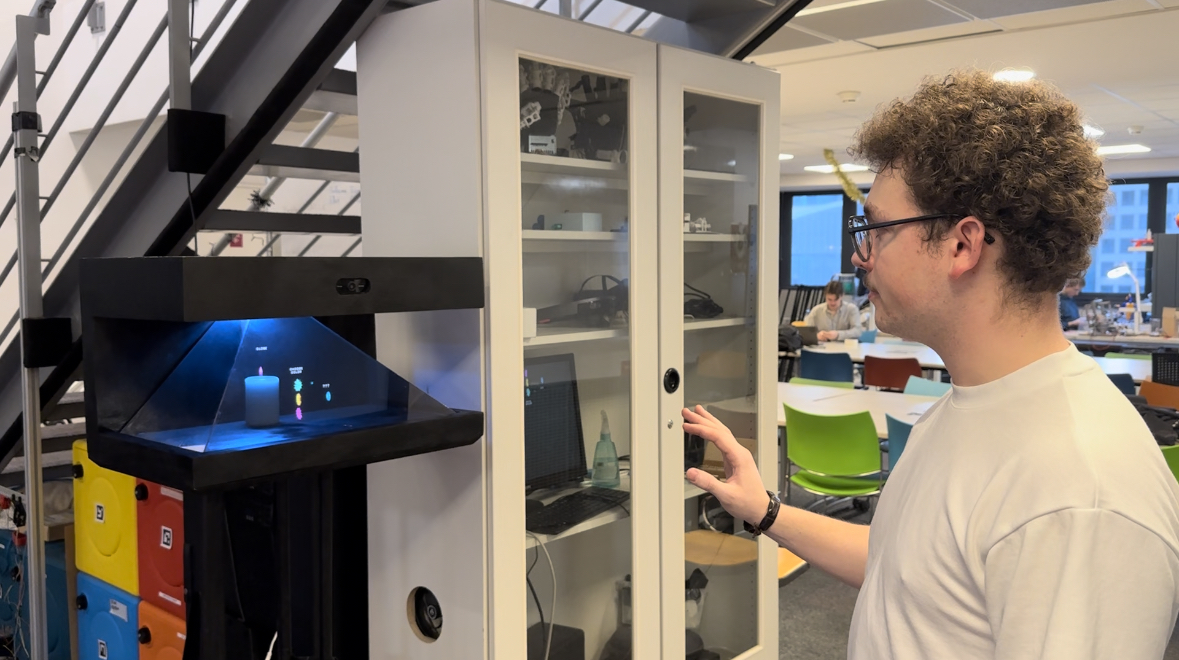




Context
The Interactive Hologram project challenges students to design and build a 3D interactive holographic display using physical construction and projection techniques. Holograms are a fascinating technology that create the illusion of three-dimensional images floating in space, allowing viewers to perceive depth and perspective without wearing special glasses. This visual effect can be achieved through several techniques, among which Pepper's Ghost projection is widely used for its simplicity, clarity, and impressive visual impact.
Holograms have applications in entertainment, exhibitions, art, education, and interactive installations. By combining holographic displays with sensors and interactivity, users can not only observe the content but also manipulate it, triggering animations, changing perspectives, or interacting with digital elements. This makes holograms a powerful tool for playful learning, encouraging exploration, experimentation, and creativity.
Students will construct the display structure using materials such as plexiglass or glass panels and implement Pepper's Ghost projection technology to produce realistic 3D illusions. The project focuses on hands-on design, structural assembly, and interactive experience, challenging students to think about visual perception, user engagement, and immersive interaction. It provides an opportunity to explore the intersection of physical construction, optical effects, and interactive system design in a tangible and visually striking way.
Playful learning is central to the project: experimentation, immediate feedback, and user interaction encourage curiosity, problem-solving, and collaboration. Students will develop not only technical skills but also a sense of how to create engaging and interactive experiences that captivate and immerse users.
General Overview
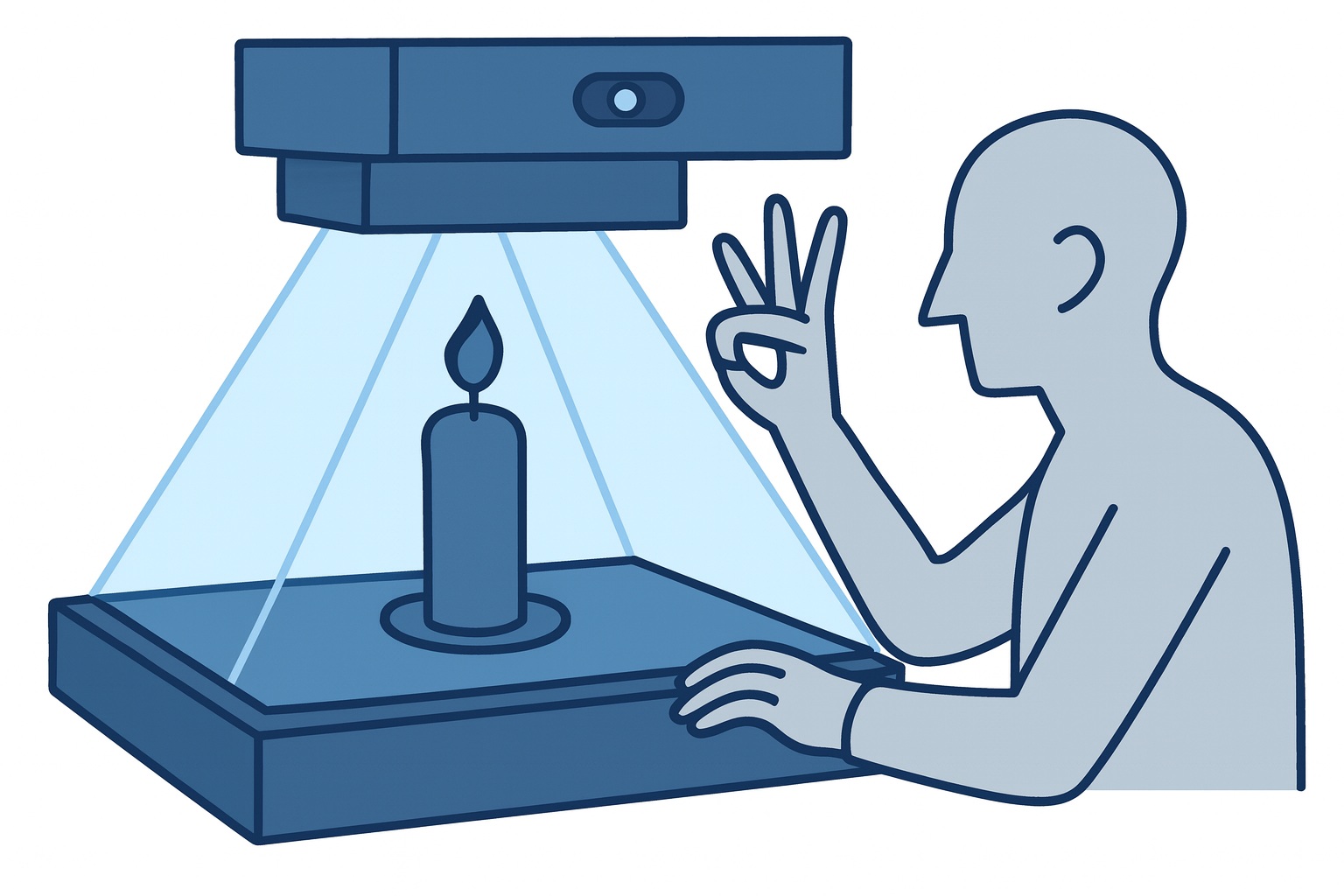
The Interactive Hologram system consists of:
- A physical structure integrating plexiglass or glass panels arranged to support holographic illusions
- Projection equipment to display images or videos that appear as 3D floating content via Pepper's Ghost technique
- User interaction through gestures, motion tracking, or touchless input devices
- Visual and optional audio feedback to enhance the immersive experience
The system can support a wide range of applications, such as:
- Interactive exhibits or media displays
- Art installations and creative presentations
- Gaming or playful interaction experiences
- Demonstrations of digital content in an immersive format
The platform is modular, allowing students to experiment with structure, projection angles, and interaction methods.
Technical Specification Schematics
Students are expected to design and implement a complete interactive holographic system, including:
Structure & Display Layer
- Construction of a stable frame using plexiglass or glass panels
- Proper arrangement of panels to enable Pepper's Ghost projection
- Projection setup to create clear and realistic 3D illusions
Sensing & Interaction Layer
- Optional depth cameras, motion sensors, or gesture detection systems
- Calibration to map user actions to holographic content manipulation
Feedback Layer
- Visual overlays using the projected hologram
- Optional spatial or reactive audio cues synchronized with interactions
Constraints & Requirements
- Structural stability and safety of glass or plexiglass components
- Correct angles and alignment for effective Pepper's Ghost illusions
- Low-latency response for interactive elements
- Scalability and adaptability to different spaces or display sizes
Students should provide schematics and diagrams showing the structure, projection paths, interaction mapping, and feedback mechanisms.
Developed Skills
- Construction of physical structures for display systems
- Implementation of Pepper's Ghost holographic projections
- Integration of sensors for interactive control
- Coordination of projection and visual feedback
- System assembly, testing, and calibration
- User-centered interaction design
Provided Materials
- Plexiglass or glass panels and framing materials
- Projection equipment suitable for Pepper's Ghost illusions
- Sensors for gesture or motion detection
- Embedded computing platforms for interaction handling
- Audio components for immersive feedback
Pedagogical Goals
This project aims to:
- Develop students’ skills in physical construction, interactive display, and immersive visualization
- Foster creativity and experimentation with tangible materials and projections
- Encourage problem-solving in the design and alignment of optical illusions
- Build competence in system integration, user interaction, and assembly
- Strengthen teamwork, autonomy, and communication skills