



Context
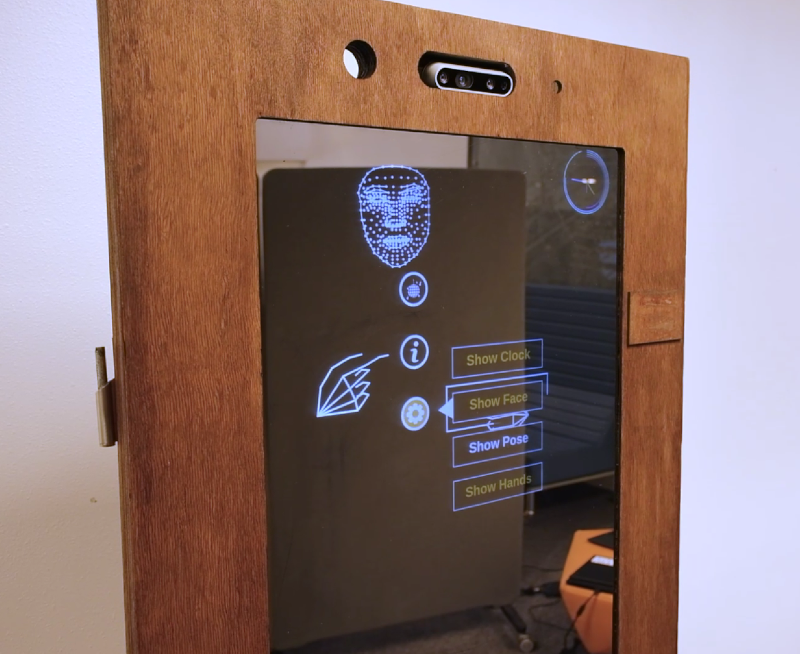
The Augmented Reality Mirror project challenges students to design and build an interactive mirror system that overlays digital content onto a real-world reflection. Such mirrors combine computer vision, real-time tracking, and augmented reality (AR) rendering to create immersive, interactive experiences.
One compelling application is learning the sign language, where the mirror can detect the user’s hand and body movements and provide visual feedback, corrections, or instructions in real time. This allows learners to practice gestures, receive guidance, and track progress without needing a human instructor, making learning both playful and effective.
The project emphasizes hands-on design, real-time interactivity, and user experience, challenging students to integrate physical display systems with software, sensors, and AR interfaces. It provides an opportunity to explore human-computer interaction, gesture recognition, and immersive feedback in a tangible and educational context.
Playful learning is central to this project: immediate feedback, self-paced experimentation, and interactive guidance encourage engagement, motivation, and skill development. Students will gain experience in creating systems that respond dynamically to user actions while providing meaningful and instructive visual feedback.
General Overview
The Augmented Reality Mirror system consists of:
- A mirror or reflective display surface
- A camera or depth sensor to track user movements and gestures
- An embedded computing unit to process input and generate AR overlays
- Visual feedback that is superimposed on the user’s reflection
- Optional audio feedback to reinforce instructions or corrections
Applications include:
- Language learning, e.g., practicing sign language gestures
- Interactive fitness or rehabilitation exercises
- Artistic or creative installations where users interact with virtual elements
- Educational tutorials with guided motion feedback
The system should allow real-time interaction, tracking multiple gestures or users, and provide engaging, clear feedback.
Technical Specification Schematics
Students are expected to design and implement a complete AR mirror system, including:
Structure & Display Layer
- Mirror or reflective panel suitable for overlaying digital content
- Display or projection system integrated with the mirror surface
Sensing & Interaction Layer
- Depth cameras, RGB cameras, or motion sensors to detect hand/body gestures
- Calibration tools to map gestures accurately onto the AR overlay
Processing & Feedback Layer
- Embedded computing platform capable of real-time image processing and AR rendering
- Gesture recognition algorithms for detecting and interpreting user actions
- Visual overlays for guidance, corrections, and feedback
- Optional audio cues synchronized with gestures
Constraints & Requirements
- Low-latency processing for smooth interaction
- Accurate gesture recognition for effective learning
- Robust operation under different lighting conditions
- Safe and ergonomic setup for users
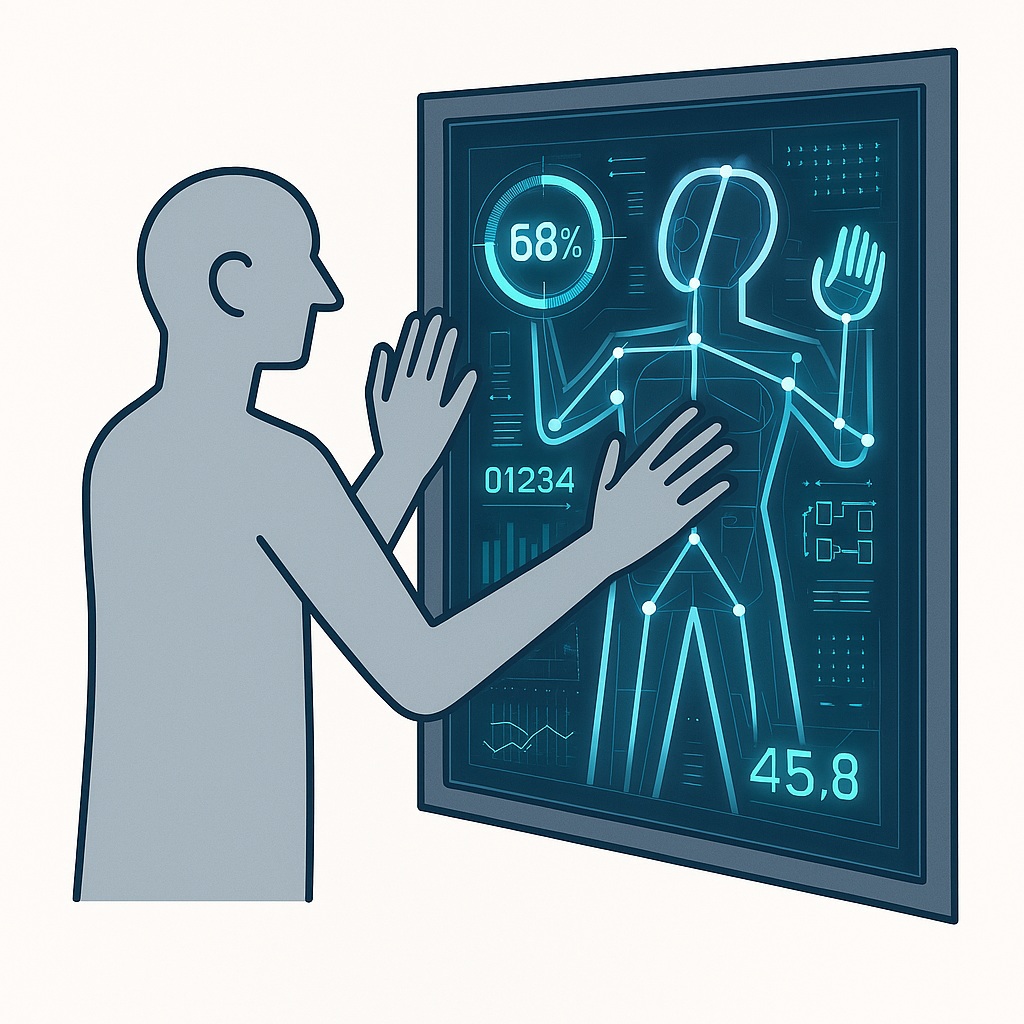
Students should produce schematics and diagrams showing the mirror structure, sensor placement, data processing pipeline, and feedback system.
Developed Skills
- Real-time computer vision and gesture recognition
- AR rendering and overlay design
- Embedded system programming and optimization
- Integration of sensors and displays
- Testing, calibration, and system tuning
Provided Materials
- Mirror or reflective panels
- Cameras or depth sensors (e.g., Kinect, Intel RealSense)
- Embedded computing platforms (e.g., Raspberry Pi, Jetson, or PC)
- Display system or projector
- Software tools for gesture recognition and AR rendering
Students are expected to adapt their designs to the available materials and justify any additional components.
Pedagogical Goals
- Develop students’ skills in interactive system design and AR technology
- Explore gesture-based interfaces for learning and engagement
- Encourage playful, hands-on experimentation with immersive technology
- Build competence in real-time processing, user feedback, and system integration
- Strengthen teamwork, autonomy, and communication skills