



Context
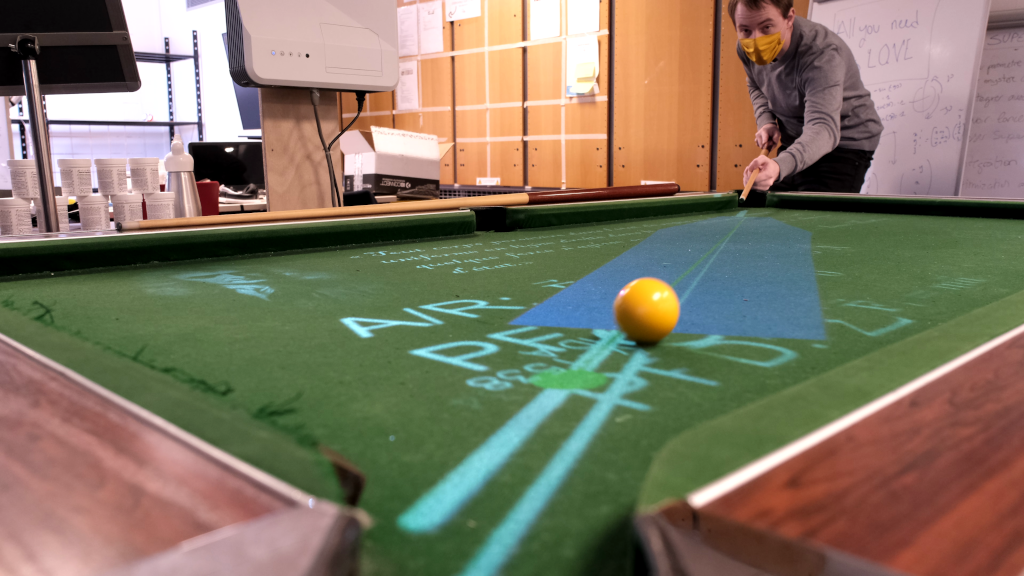
The Interactive Pool project is designed as a playful learning platform that leverages a familiar and engaging game — billiards — to support the understanding of mathematics and physics concepts. By embedding a camera, computation, and real-time visualization into a pool table, the system turns abstract notions into concrete, observable phenomena.
Playful learning places the learner in an active role: experimentation, trial-and-error, and immediate feedback naturally encourage curiosity and engagement. In this context, billiards becomes an ideal medium to explore topics such as geometry, kinematics, dynamics, and energy transfer. Each shot offers an opportunity to observe trajectories, angles, collisions, and physical laws unfolding in real time.
The project aims to transform the pool table into an interactive learning environment where play, experimentation, and scientific reasoning reinforce each other. Students are challenged to design a system that not only functions technically, but also supports understanding, intuition, and exploration through interaction.
General Overview
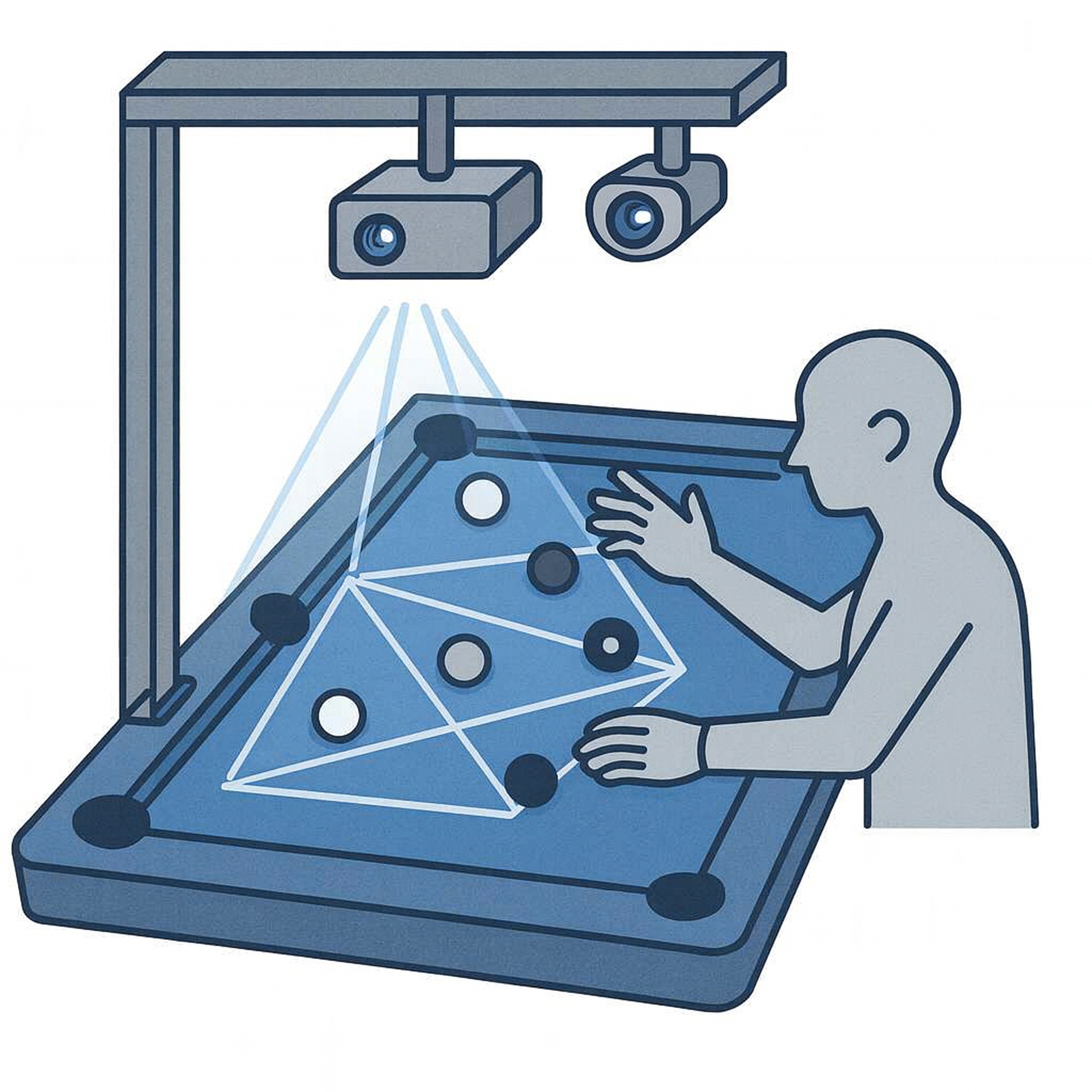
The Interactive Play Pool consists of :
- A standard or modified billiard (pool) table
- A camera capable of detecting balls, and player interactions (position, movement)
- An embedded control system processing interaction data in real time
- A video projector that provides immediate feedback
Player actions—such as striking balls, ball collisions, or scoring events—are captured by the system and translated into visual and/or sound responses. These responses may guide the player, enrich gameplay, or introduce new game modes and rules.
The system is designed to be modular and configurable, allowing the implementation of different interaction scenarios such as training assistance, augmented rules, competitive modes, or educational demonstrations.
Technical Specification
Students are expected to design and implement a complete augmented interactive system composed of the following layers:
Sensing Layer
- Overhead camera
- Calibration tools to map physical coordinates to digital space
Processing & Infrastructure Layer
- An embedded computing unit running GOSAI (General Operating System for Augmented Interface), an open-source operating system dedicated to interactive and distributed real-time applications. [https://github.com/GOSAI-DVIC]
- Real-time acquisition and processing
- Event detection, motion tracking, and physics computation
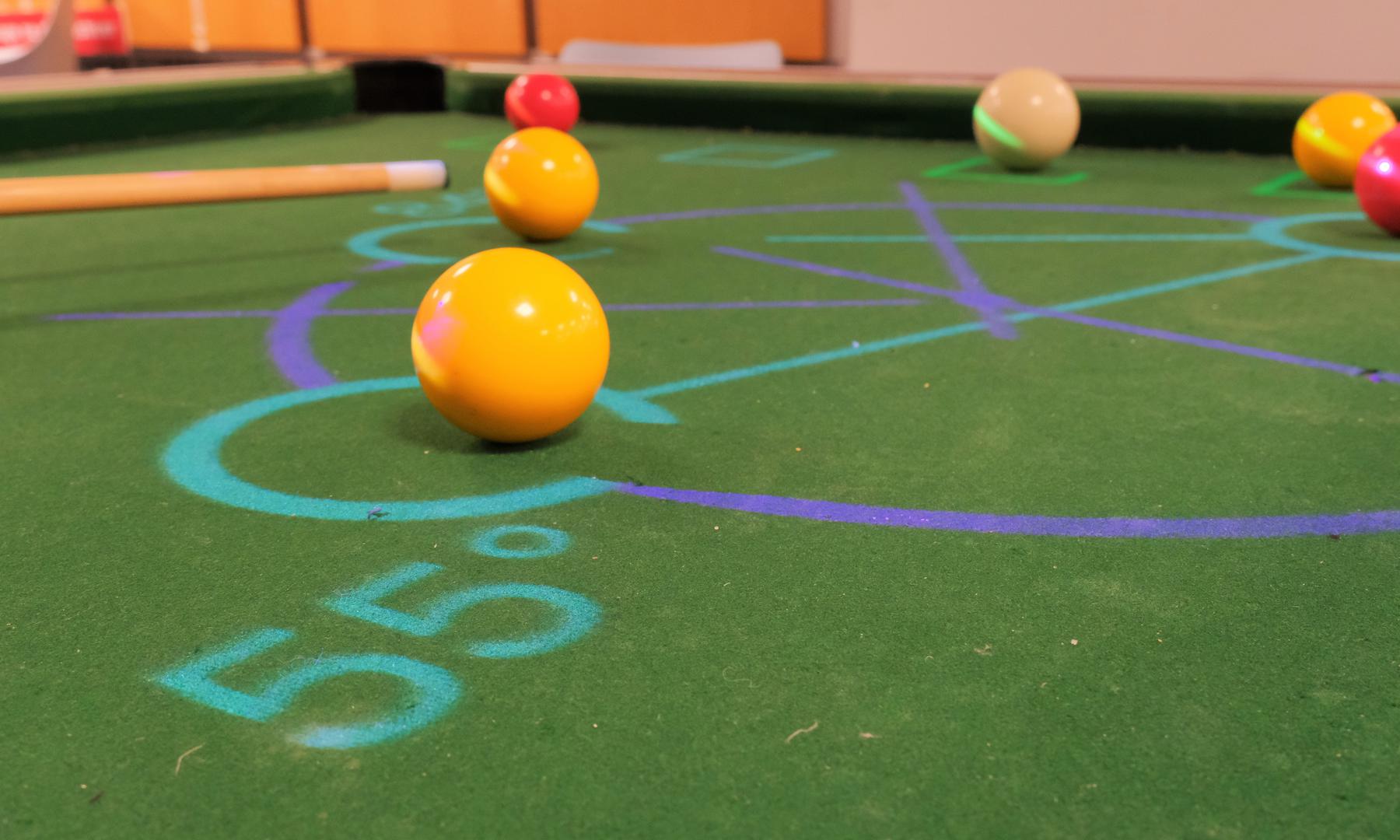
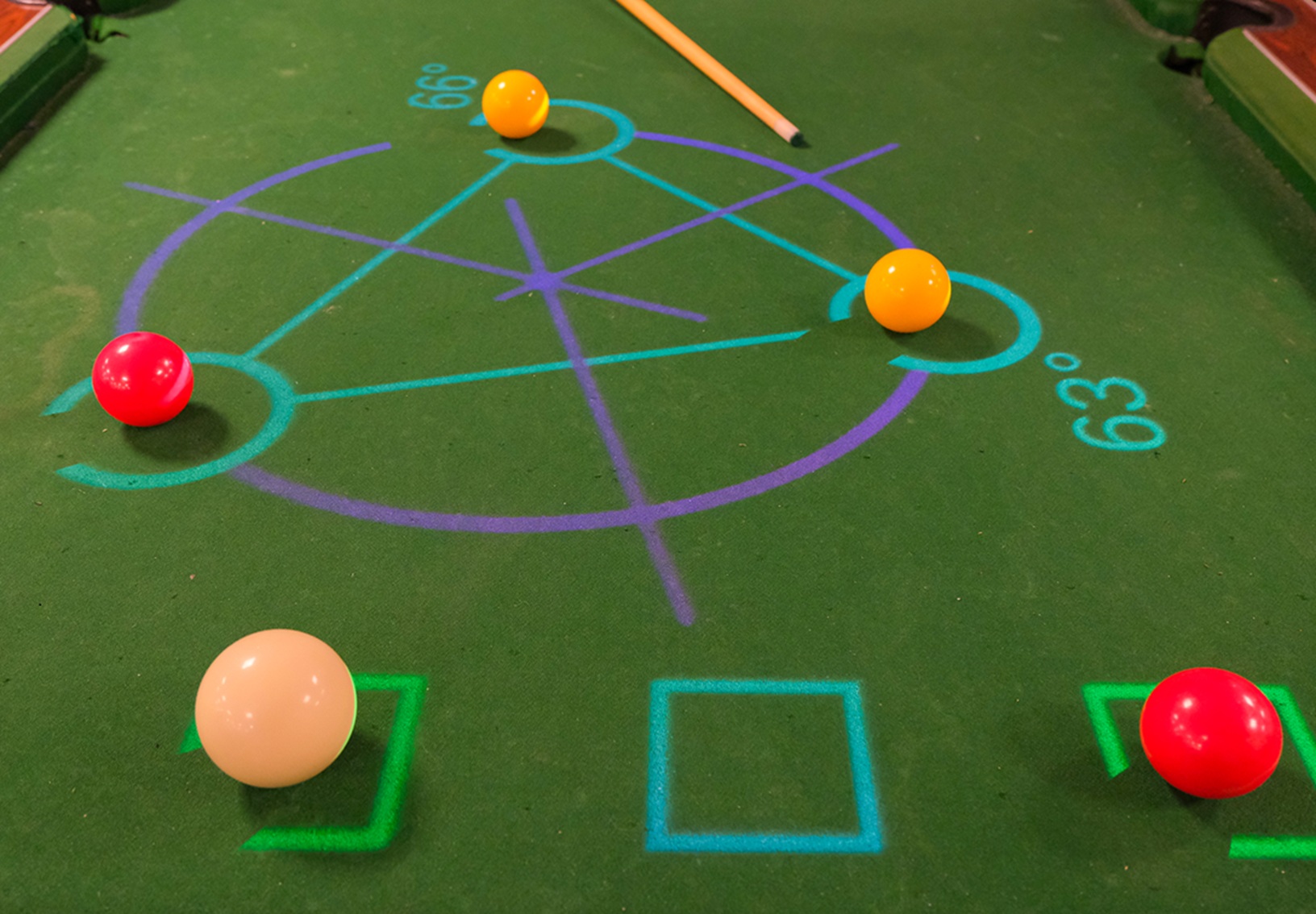
- Implementation of mathematical models (angles, vectors, trajectories, collisions)
Actuation & Feedback Layer
- Projection system integrated above the table
- Visual overlays such as trajectories, vectors, predicted paths, angles, and annotations
- Optional audio feedback linked to physical events or learning cues
System Constraints
- Low-latency response between physical interaction and feedback
- Robust detection and display under varying lighting conditions
Developed Skills
- Embedded systems and real-time programming
- Motion tracking
- Applied physics modeling (kinematics, collisions, energy transfer)
- Geometric computation and visualization
- Hardware–software integration
- Prototyping, calibration, and testing
- Fluent programming in Python & Node.JS
- Strong interests in AI development
- Understanding of OS architecture
- Protocol and network configuration
- Abilities to manufacture aluminium structure
Provided Materials
- Pool table with a camera mounted on dedicated structure above the table
- Embedded computing platforms (microcontrollers, SBCs)
- Laser video projector
- GOSAI source code
- Audio output components
- Power supplies and basic electronic components
Students are expected to adapt their design to the provided materials and justify their technical choices.
Pedagogical Goals
- Promote learning through play by making mathematics and physics tangible
- Connect abstract concepts to real-world physical behavior
- Develop understanding of geometry, mechanics, and dynamic systems
- Introduce students to real-time cyber-physical systems
- Encourage experimentation, hypothesis testing, and exploration
- Strengthen autonomy, teamwork, and engineering communication skills
- Advanced Programming
- UX / UI skills