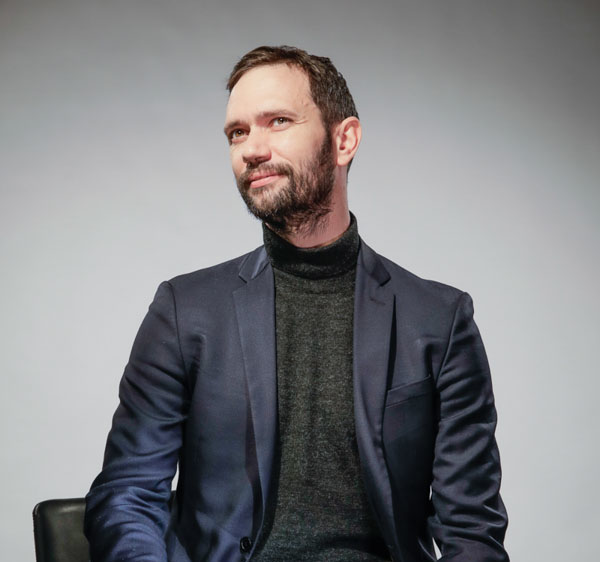

Clément Duhart currently serves as the Director of Strategy and Innovation at IONIS Education Group. From 2018 to 2024, he led the Institute for Future Technologies, which he founded in 2019. Within this institute, he also heads the Artificial Lives research group, focusing on Human-Machine interfaces, mixed realities, and swarm robotics. With a solid foundation in embedded systems engineering, Clément holds a master's degree in Artificial Intelligence from the Sorbonne and earned his doctorate in computer science from the University of Le Havre in 2016. Clément's career trajectory shifted towards deep learning after his initial work in the Internet of Things and large-scale mesh wireless sensor networks. In 2015, he embarked on a collaborative venture with MIT Medialab, starting as a visiting student and later becoming a postdoc and research scientist. During this time, he contributed to the Tidmarsh project, which is dedicated to restoring industrial wastelands in wetlands. His responsibilities included developing deep learning and wireless sensor network technologies to capture dynamic changes in environmental and wildlife parameters. The ultimate goal was to construct a tele-presence reality, aiding restoration practitioners and fostering public engagement through innovative tools.
Clément Duhart currently serves as the Director of Strategy and Innovation at IONIS Education Group. From 2018 to 2024, he led the Institute for Future Technologies, which he founded in 2019. Within this institute, he also heads the Artificial Lives research group, focusing on Human-Machine interfaces, mixed realities, and swarm robotics. With a solid foundation in embedded systems engineering, Clément holds a master's degree in Artificial Intelligence from the Sorbonne and earned his doctorate in computer science from the University of Le Havre in 2016. Clément's career trajectory shifted towards deep learning after his initial work in the Internet of Things and large-scale mesh wireless sensor networks. In 2015, he embarked on a collaborative venture with MIT Medialab, starting as a visiting student and later becoming a postdoc and research scientist. During this time, he contributed to the Tidmarsh project, which is dedicated to restoring industrial wastelands in wetlands. His responsibilities included developing deep learning and wireless sensor network technologies to capture dynamic changes in environmental and wildlife parameters. The ultimate goal was to construct a tele-presence reality, aiding restoration practitioners and fostering public engagement through innovative tools.